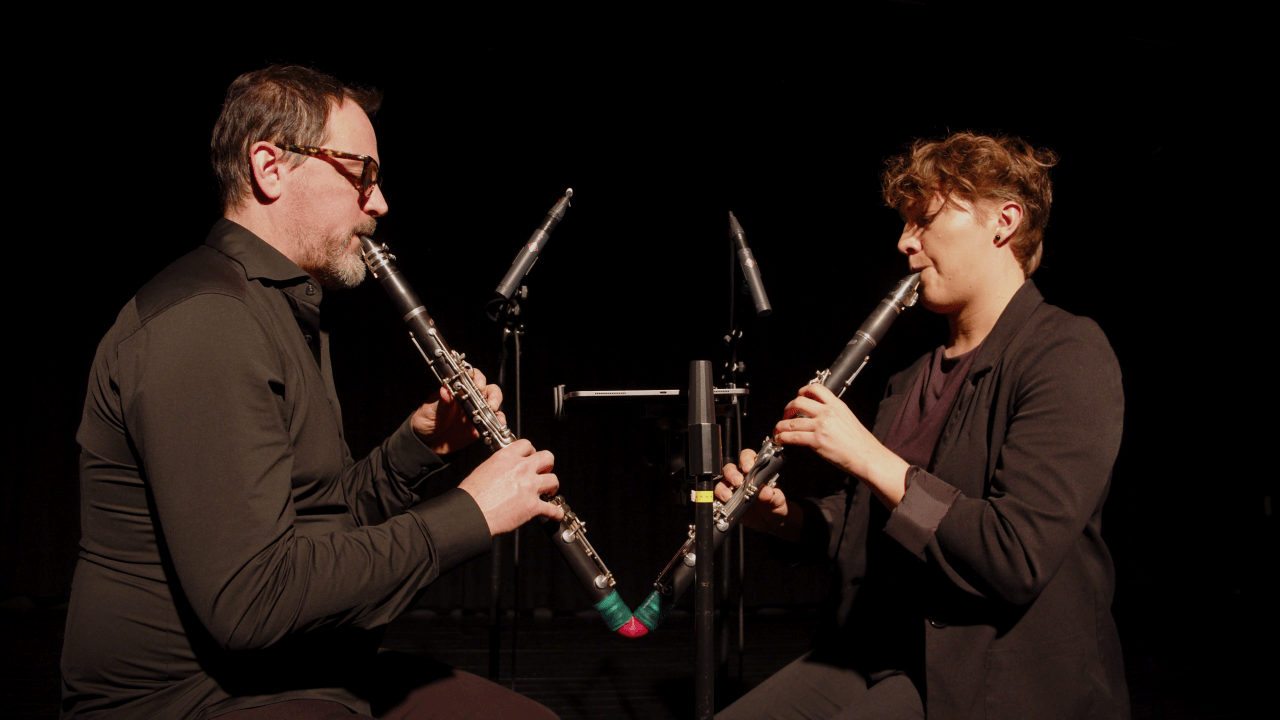
Alessandro Perini – “Flyback” (2025)
for two interconnected clarinets
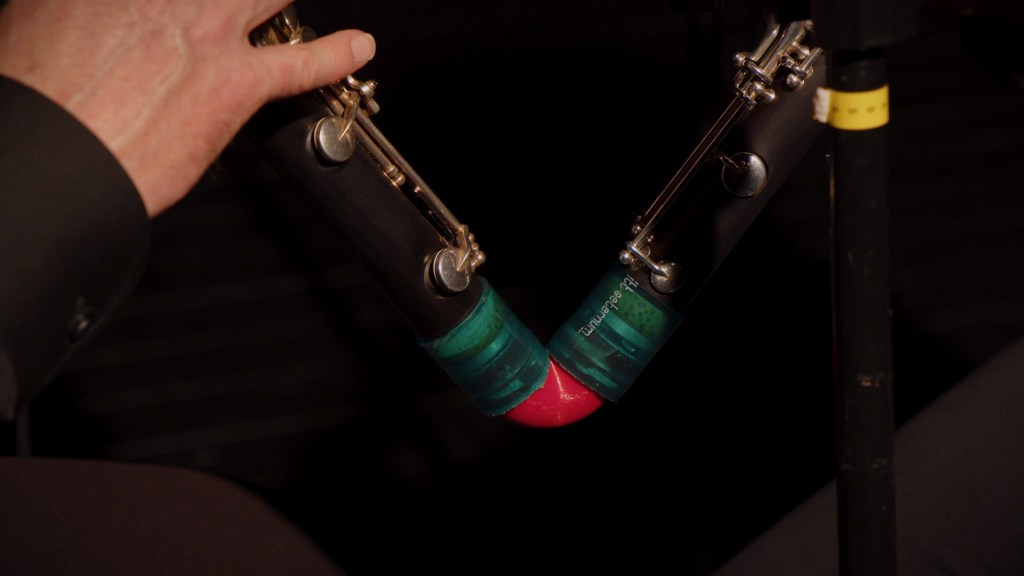
In this setup, two clarinets are physically connected into a single, shared instrument. The bells are removed and replaced by two short segments of PVC tubing with the same inner diameter as the clarinet bore (about 18 mm), connected by a custom 3D-printed joint. The air columns in the two clarinets merge into one.
When both players blow simultaneously, the air column inside the tube become shared. A change in one performer’s embouchure, fingering, or air pressure directly affects the tone production of the other. The result is a hybrid system in which neither player has full control: the two clarinets form a coupled resonator, producing complex interactions such as beating frequencies in the low register, particular multiphonics, and shifts of pitch and timbre, with an obvious downward extension of the instrumental range.
The compositional process took place in close collaboration with the performers Natalie Eriksson and Robert Ek, whose presence was essential: it is impossible to predict the outcome of fingerings and interactions between the two instruments without direct testing. Several test sessions were dedicated to inventing new fingerings, often starting from very closed positions, since the strongest interference occurs in the lower range of both clarinets.
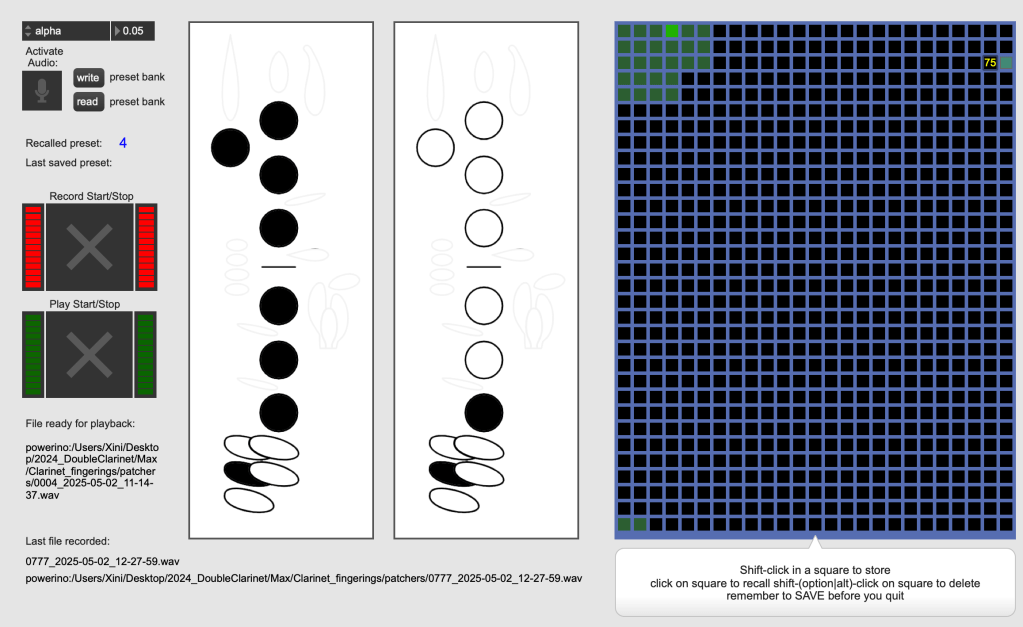
To document and organize these tests, I developed a small Max/MSP tool to store and visualize the fingerings used, in connection with recordings. An early version of this software is shown in the screenshot below; I plan to refine and release it on my blog in the future.
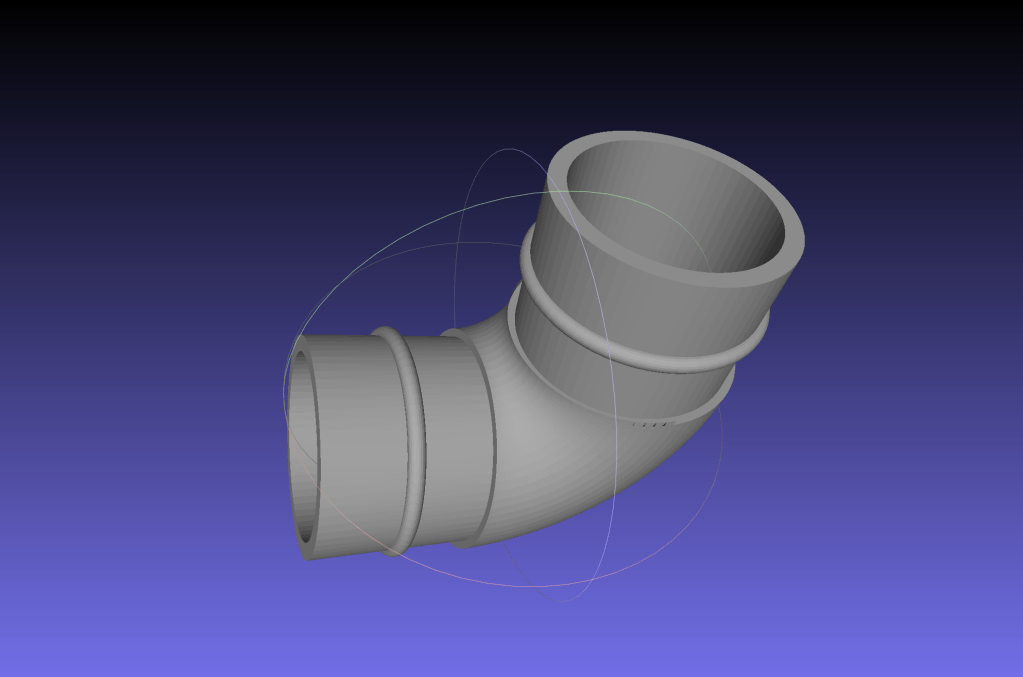
Hereunder is the 3D model for the pipe joint I used. You are welcome to download the .stl file here modify it and print it following your needs if you want to experiment further. It is designed for connections with 18mm hose pipes.
The project was funded by Kulturrådet and supported by Inter Arts Center.

 Alessandro Perini